Signs Your Baby Is Too Cold at Night

Signs Your Baby Is Too Cold at Night

New parent life is full of guesswork—but nighttime temperature doesn’t have to be. Here’s how to spot when your baby may be too cold and what to do so everyone sleeps better.

Quick signs your baby is too cold

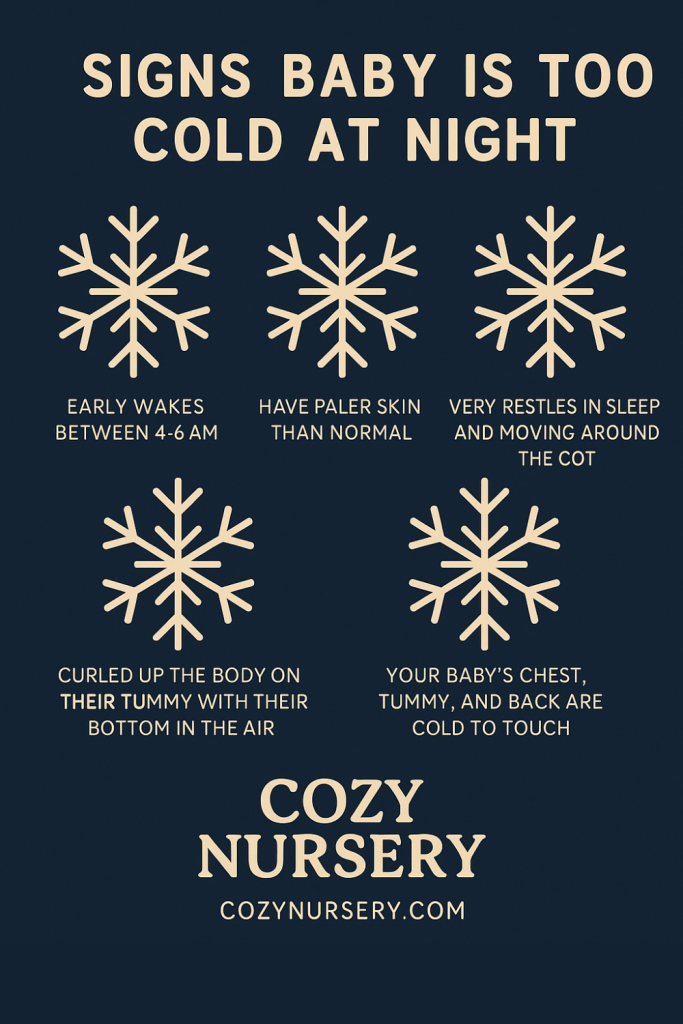
These are the cues from our Cozy Nursery infographic, explained:

  • Early wakes between 4–6 a.m.
    The coldest hours of the night are just before sunrise. If your baby starts popping awake then, temperature is a likely culprit.

  • Paler skin than normal
    Chilly babies shunt warm blood to the core, so cheeks, hands, or feet may look paler than usual.

  • Very restless sleep and lots of wriggling
    Babies can’t add blankets, so they move more to generate heat.

  • Curled-up “little hedgehog” posture
    Tummy tucked, bottom in the air = conserving body heat.

  • Chest, tummy, or back feel cool to the touch
    Always check the torso/back of the neck, not hands or feet (extremities are often cool and can mislead you).

Tip: A comfortably warm baby’s chest/back feels warm, not sweaty.

Ideal nursery temperature

  • Aim for 20–22°C (68–72°F)

  • Use a simple room thermometer at baby’s sleep level (not right by a vent or window).

Signs Your Baby Is Too Cold at Night

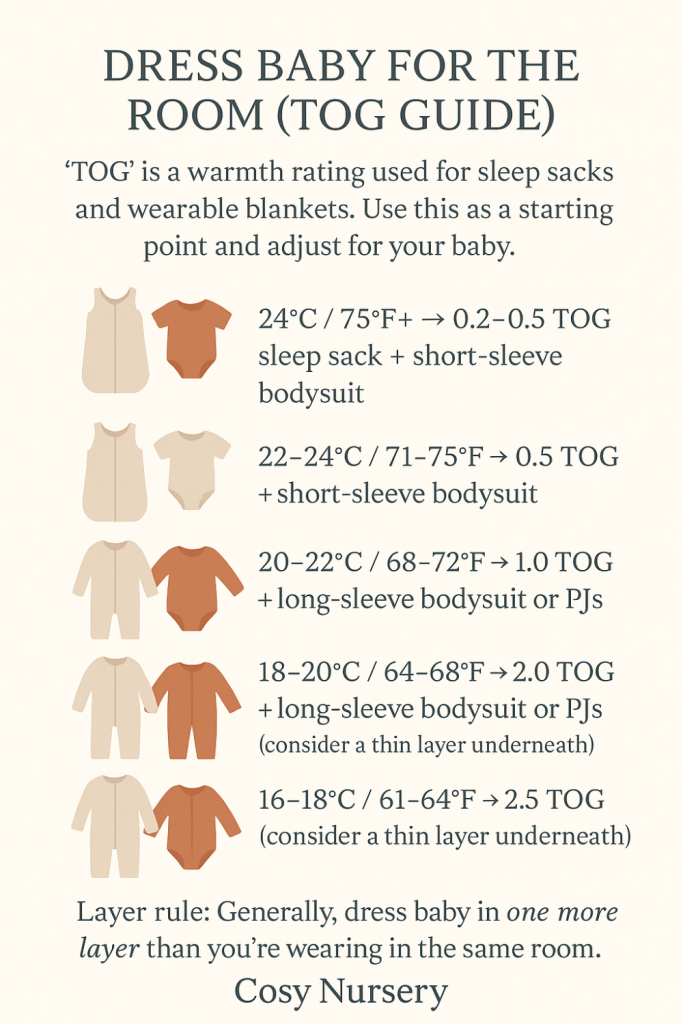
Dress baby for the room (TOG guide)

“TOG” is a warmth rating used for sleep sacks and wearable blankets. Use this as a starting point and adjust for your baby.

  • 24°C / 75°F+ → 0.2–0.5 TOG sleep sack + short-sleeve bodysuit

  • 22–24°C / 71–75°F → 0.5 TOG + short-sleeve bodysuit or light PJs

  • 20–22°C / 68–72°F → 1.0 TOG + long-sleeve bodysuit or PJs

  • 18–20°C / 64–68°F → 2.0 TOG + long-sleeve bodysuit or PJs

  • 16–18°C / 61–64°F → 2.5 TOG + long-sleeve bodysuit/PJs (consider a thin layer underneath)


Layer rule: Generally, dress baby in one more layer than you’re wearing in the same room.

Safe ways to warm things up

Use a sleep sack, not loose blankets. (Loose bedding raises suffocation risk.)

  • Pre-warm the room, not the crib. If you use a space heater, choose one with a thermostat, tip-over protection, and keep it well away from baby and bedding.

  • Block drafts. Check windows, doors, and vents; position the crib away from them.

  • Dry = warmer. Damp PJs from drool, spit-up, or sweat will chill quickly—swap them out.

How to check baby’s temperature comfortably

1..Feel the chest/back of the neck. Warm = good. Cool = add warmth. Sweaty/hot = remove a layer.

2. Watch behavior. Frequent stirring, grunting, or early wakes can signal chill.

3. Look at the face. Pale or mottled skin can indicate baby is cold.

Avoid overheating too. Signs include sweaty neck/hairline, flushed face, rapid breathing, heat rash, or unusually deep lethargy. If concerned, remove a layer and cool the room.

Signs Your Baby Is Too Cold at Night

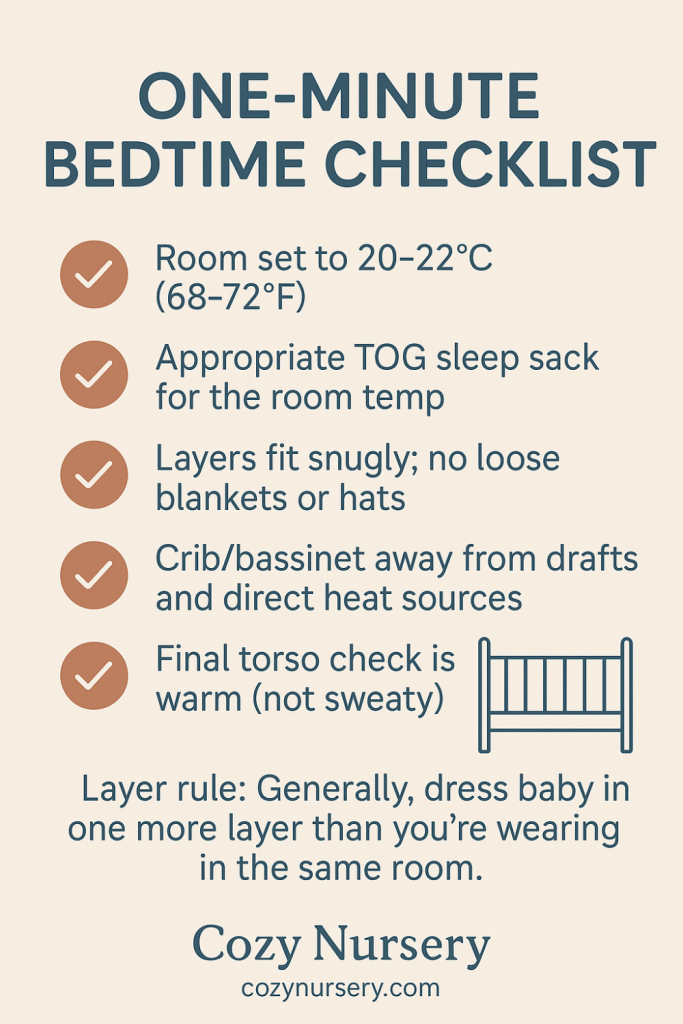
One-minute bedtime checklist

  • Room set to 20–22°C (68–72°F)

  • Appropriate TOG sleep sack for the room temp

  • Layers fit snugly; no loose blankets or hats

  • Crib/bassinet away from drafts and direct heat sources

  • Final torso check is warm (not sweaty)


Warm baby = longer stretches of sleep for everyone. For more cozy nursery tips, sleep-sack guides, and printable checklists, visit cozynursery.com.

There you have it, mamas! These fall baby shower themes are sure to make your celebration extra memorable. Whether you go with a pumpkin theme or a cozy flannel vibe, the most important thing is to enjoy this special time with your loved ones.

If you're looking for more nursery decor and baby essentials, visit Cozy Nursery.

Happy planning and congrats on your little one!

The following two tabs change content below.

cozynursery

Hey! My name is Kate and I am the founder of Cozy Nursery. I am passionate about creating nurseries, as well as sharing the knowledge of what it is like to be a mother. I create real blog posts, where I share the truth. The real hospital bag list and so much more! Get excited!
0 0 votes
Article Rating
Subscribe
Notify of
guest
0 Comments
Oldest
Newest Most Voted